
How to Choose the Right Waste Removal Option for a Renovation
How to Choose the Right Waste Removal Option for a Renovation
Most renovation budgets blow out on waste because owners pick the bin first and think about the material second. The right choice depends on what you’re throwing out, how heavy it is, who will load it and whether trucks can reach it. Get those four calls right and you won’t pay for extra weight, permits or second trips.
Start with the waste, not the bin
Every renovation produces construction and demolition waste. That is the formal group your old kitchen and broken tiles fall into. Australia generated 27 million tonnes of construction and demolition waste in 2018-19 (National Waste Report 2020). At that scale, Sydney tips and recyclers need to treat building waste differently from household rubbish.
Cosmetic work leaves you with light, bulky material. Plasterboard and timber offcuts take up space but don’t weigh much. Old cabinetry and flat-pack packaging behave the same way. Full strip-outs and extensions are different. Brick and concrete become heavy quickly, and a small pile can push a truck over its legal load.
Hazardous material sits in its own group. Paint tins and solvents can’t go in a general load. Lead paint dust and treated pine offcuts need separate handling as well.
Sort this out before you call anyone. If you mix dense rubble with light waste, you will pay dense rates for the whole load. Mixing paint with timber can contaminate material that could otherwise have been recycled. A quick walk through the house with a notepad saves confusion later. List what is heavy and what looks risky.
When plasterboard and timber are mixed with brick and concrete in one bin, the whole load often tips as general waste. Sorting takes extra time, and transfer stations charge for it. That mistake alone can double disposal costs.
Match the method to the size of the job
Small jobs suit a simple setup. A kitchen refresh or bathroom pull-out often stays under 3 cubic metres. A 2 or 3 cubic metre skip can sit in the driveway for a few days while you fill it at your own pace. You don’t need a crew for that volume.
Large jobs change the maths. A full knockdown or extension can produce tonnes of brick and concrete. You won’t move that by hand over a weekend. Backloading suits this stage because the crew brings a tipper truck and loads it for you.
Think in stages rather than treating the job as one big clean. Strip-out waste is mostly plasterboard and timber. Rubble comes later with tile and concrete. Packaging tends to pile up last with cardboard and plastic wrap.
Book removal to match each stage. That way, you won’t have mixed loads sitting on site for weeks.
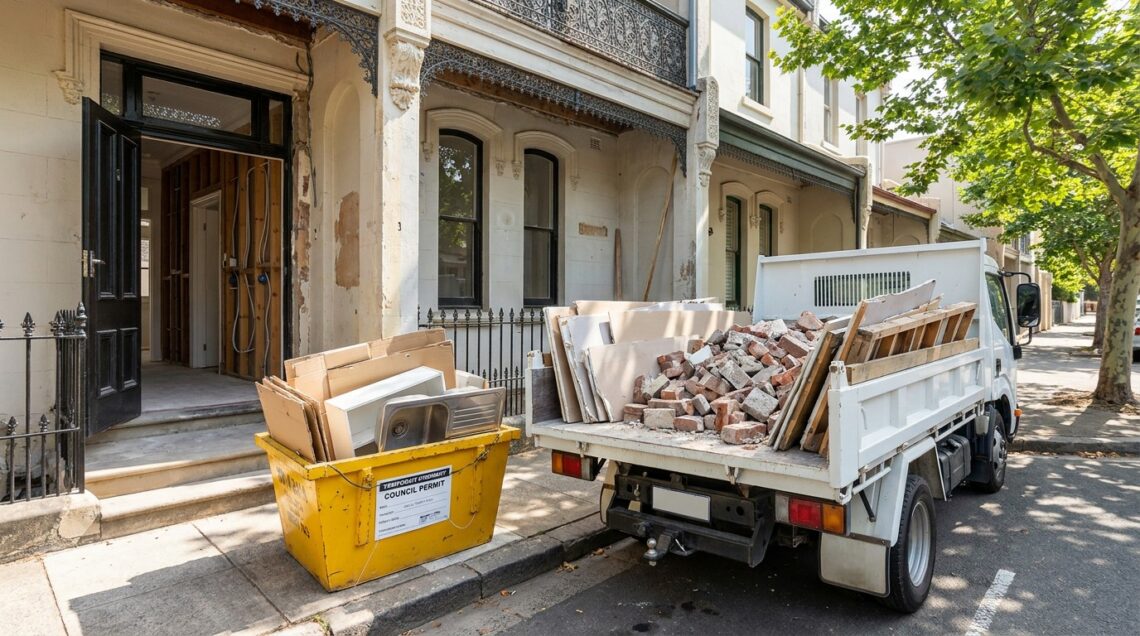
Skips need room to work. The truck needs clear vehicle access and enough open space to drop the bin. Tight inner-city blocks don’t always have that. Backloading trucks can park on the street while the crew carries waste out by hand.
Labour is the part owners often forget. Filling a skip yourself takes hours, particularly with heavy loads and dust. A crew clears that work in one visit.
Why skip prices mislead on heavy waste
Skip prices look simple. You see a cubic metre rate and pick a size. Weight is the catch. Skips are quoted by cubic metres, but they carry tonne-based payload caps.
Most general skips have a weight cap designed for light waste. Dense loads hit that cap fast. A bin full of soil or concrete can weigh several times more than the same bin filled with timber. Once you go over, excess-tonne fees apply on top of the hire. There’s also a per-tonne landfill levy in Greater Sydney that tips must pay. That levy may sit inside your quote, or it may appear later as an extra.
In our experience, bathroom demolitions cause the most surprises. Tile beds and screed look like a small load, but they weigh a lot.
A cheap headline rate often hides these extras. Some quotes allow only mixed waste up to a low weight. Brick and concrete need a heavy-waste rate from the start. If you book the wrong type, the driver can refuse the load or charge you to sort it. That’s where costs blow out.
Ask for the numbers before you book. Find out what weight is included in the price and the fee for each extra tonne. Check whether the levy is included and whether heavy waste needs a different bin. Get the weight limit in writing so you can compare like with like.
Skip hire compared with full-service removal
DIY hire and full-service removal solve different problems. A skip suits you when you have time and space to load at your own pace. Full-service removal is a better fit when you have heavy rubble or tight access.
You do the work with a skip. You carry everything out and stack it level with the rim, which can mean weekends of dust and sore backs. Full-service crews do the work and sweep up afterwards. You point, and they load.
We see this trap often with tight terraces. Owners book a big bin to save trips, then pay overweight fees that dwarf the original hire cost.
Count the whole job when you compare options. Add your weekends and any help you need to pay for. Include the risk of overweight fees and second bins. For knockdowns with mixed rubble and timber, many owners find that booked Renovation Waste Removal Sydney is the safer all-in-one choice because the crew sorts and recycles the load.
Backloading often wins on heavy jobs.
Backloading uses a walker or tipper truck that the crew loads directly. You don’t pay for bin days you don’t use. It also avoids handling bricks twice, first from the pile to the bin and then from the bin to the truck. The truck leaves full and you get your driveway back.
Skips still win in some cases. If your waste is light and you want a week to clean up slowly, a bin is hard to beat. Delivery is also quick when you have open driveway space and clear access.
A company that runs its own trucks and uses licensed recycling plants can usually quote a fixed price once it sees photos and volumes. This removes much of the guesswork around weight overages.
Asbestos and hazardous waste need a separate plan
Older homes need extra care. Any Sydney home built before 1990 can contain asbestos in walls and roofing. It can also hide in old floor coverings and eaves. You can’t identify it safely by looking at it.
Asbestos never goes in a standard skip. Licensed contractors must remove it under strict controls. They wrap and label it for approved disposal. Put it in general waste and you risk fines as well as harm to workers.
Other hazards need their own disposal path. Leftover paint and solvents can’t go to landfill mixed with rubble. Lead dust from old paint needs containment. Treated pine offcuts can’t be burned or buried on site.
If you are unsure, pause and get advice. Ask your builder or hygienist about anything that looks suspect. Keep suspect sheets damp and untouched until they are tested. Don’t break them up to fit a bin.
Check the age of the house first. Fibro walls and old vinyl backing are common warning signs. Corrugated roofing from that era needs testing too.
Cutting corners here costs more later. Illegal dumping of asbestos attracts heavy penalties and clean-up bills. Neighbours are quick to report dusty work. Using a licensed service protects your health and keeps the project on schedule.
Access, permits and timing can make or break the booking
Access determines many of your options. A loaded skip is heavy, and it can crack pavers or damage driveways. Soft ground after rain makes the risk worse. Measure gates and check slopes before you book.
Street placement needs paperwork. Most Sydney councils require a verge or street permit when a bin sits off your block. Rules differ by area, and fees apply per week. Book the permit early or the truck may turn away.
If you have a narrow terrace with no rear lane and only street parking in front, a large skip may not fit at all. Backloading with smaller truck trips will usually suit the site better.
Rental time can be tight. Standard hire often runs for only a few days. Keep the bin longer and daily charges begin to stack up. Have the waste ready when the bin arrives. Fill it and call for pickup straight away.
Council hard rubbish is not a backup plan. Those bulk clean-ups accept household goods and small volumes only. Building rubble is excluded. Put out bricks or plasterboard and collection crews will leave it behind. You can also face a fine for illegal placement.
Take photos of the access and share them with the company. Show the driveway width and slope. The team can then choose the right truck size. This helps you avoid a failed delivery fee.
Talk to neighbours and strata early. Trucks can block streets, and loading is noisy. A quick note with the dates keeps complaints down. Clear access on the day also saves hourly waiting fees.
How to check where your waste ends up
Ask where the load goes. Good companies tip at licensed recycling plants. These material recovery plants sort mixed loads and pull out concrete, brick, plasterboard and metals for reuse.
Paperwork proves it. Ask for the waste docket after each load. The docket shows the tip site and weight for that load. Keep it with your renovation records. If council or strata ask questions, you have the answers ready.
Cheap companies sometimes cut corners on tipping. Some dump on vacant land or in bush to avoid fees. The client can still be liable for the clean-up. A docket gives you evidence of proper disposal.
Recycling is not just feel-good talk. The standard hierarchy is to avoid and reduce first, then reuse and recycle before disposal. A company that sorts its loads shows that it works this way. That care also keeps neighbours and managers off your back.
Judge the price on the finished job. A skip looks cheap per cubic metre until you add labour and second trips. Full-service removal looks expensive until you count the weekends saved and remove the risk of an overweight shock. Pick the option that leaves the site clean and puts proof in your hand.
Run a quick check before you pay. Confirm the company is licensed to carry building waste. Ask it to name the recycling plant it uses and confirm it will supply dockets without being chased. It should also separate heavy and light loads at pickup.
We’ve all seen renovations stall over waste. Sort materials by weight and risk. Book the truck that fits the site and keep the docket. The clean-up can then fade into the background while the new rooms get the attention.

You May Also Like

Disability Insurance: What You Need To Know

6 Tips for Planning a Low-cost Funeral