
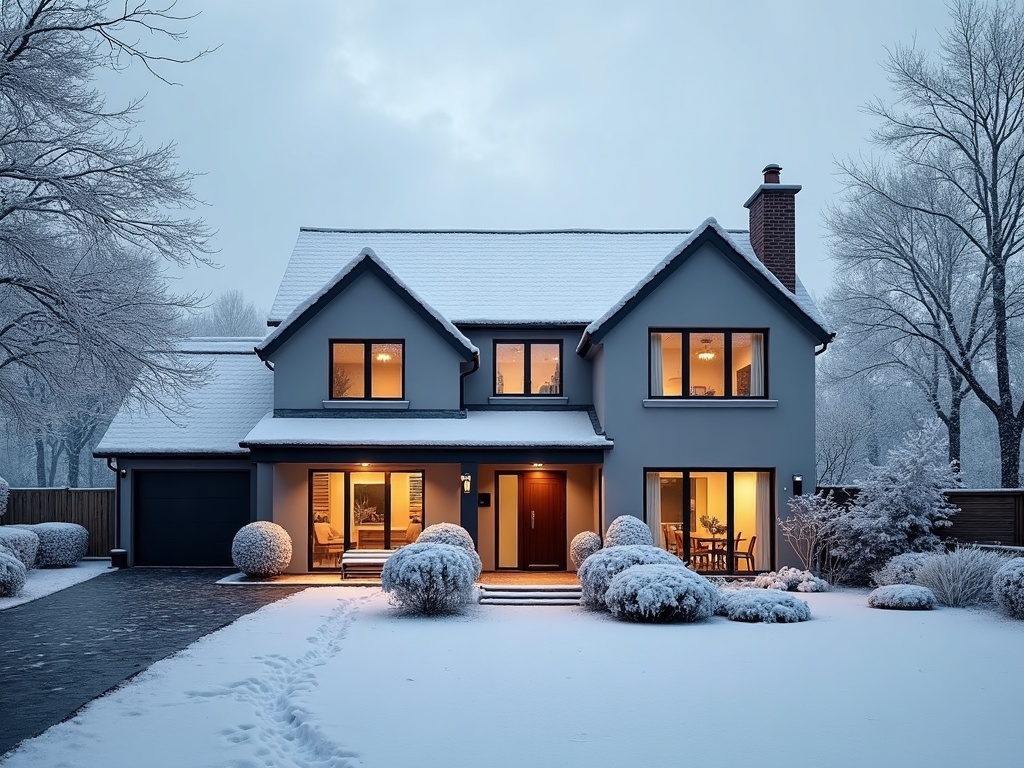
How to Create an Energy-Efficient Heating Strategy for Your Household
How to Create an Energy-Efficient Heating Strategy for Your Household
Many households approach the issue of keeping warm in the winter by trying to adjust the thermostat, but the reality is that this is not a really effective solution. A heating system that is operating in a building that has many leaks is equivalent to using expensive air conditioning in reverse, because essentially you are paying to heat the outdoors. Before making any adjustments to your heating equipment, make a simple tour of your home from the outside and see what the most obvious issues are: are there gaps around your door frames, do your windows rattle in the wind, is your attic not insulated, or is the insulation there old and not working properly?
Sealing the doors and windows of your home is one of the solutions that require the lowest costs and provide the fastest results. When the seal around a door is deteriorated, it’s not just that it allows cold air to come in, but it creates an imbalance of pressure and the warm air is drawn outside. The exteriors of the doors are in practically the same place where there are sealing gaskets at the bottom of the doors, sealing the problem to the ground level, where the cold air accumulates in the first place. If you are in the attic, check the recommended levels for your climate zone against the R-value of your insulation. In most regions, the attics are the area with the oldest houses that lose the most heat, and adding insulation to the attics will cost a fraction of the price of a new heating system.
Program The Thermostat Like It Matters
Wasting money by heating an empty house like an occupied one is unfortunately still very common. The persistent over-time solution is simply not to modify equipment at all but just adapt the schedule for how people actually use the house.
The target during active hours is around 68°F. From there, dropping the temperature 7 to 10 degrees while everyone is asleep or away generates real savings. The U.S. Department of Energy says that kind of setback applied consistently over eight hours a day can reduce annual heating and cooling costs by up to 10%. Over a full winter, that’s a meaningful number.
A smart thermostat automates this without requiring anyone to remember anything. Most learn your patterns within a few weeks and adjust on their own. A basic programmable unit with a manually entered schedule will produce the same result if the schedule is followed.
Keep The Mechanical System In Working Order
None of the above matters much if the heating equipment itself is running at reduced capacity. A furnace operating with a clogged filter, dirty burners, or a cracked heat exchanger isn’t delivering the efficiency its AFUE rating promises. It’s just burning more fuel to produce the same output.
Furnace filters should be replaced every 30 to 90 days depending on filter type (MERV rating) and household conditions – homes with pets or high dust levels need more frequent changes. It’s a $10 to $20 fix that prevents a cascade of airflow problems.
For the broader system, annual professional servicing before the heating season starts is non-negotiable if efficiency is the goal. A certified technician will clean the burners, inspect the heat exchanger for cracks, check refrigerant levels on heat pump systems, and confirm the whole system is running within spec.
For households that run on propane, ensuring a reliable supply ahead of the colder months is just as important as the servicing itself — those in Northeast Florida could look at a local provider like seabreezelp.com, or a similar propane delivery service in their area, to make sure they’re not caught short when temperatures drop.
If the system is more than 15 years old, it’s also worth getting a read on its current AFUE rating and comparing it to what Energy Star-certified replacements offer. Modern high-efficiency units often run at 95% AFUE or better. Older units commonly run at 60 to 70%. That gap compounds across an entire winter.
Let Sunlight Do Some Of The Work
You don’t have to pay to activate passive solar heating. South windows – or, in certain configurations, west windows in the afternoon – gather in solar heat right through the glass then discharge it into your living space. Opening and closing window coverings during the standard cycle can introduce you to passive solar ease. Pull back the curtains or lift the blinds in the morning to allow in the sun, then close them at dusk to keep the heat inside. Windows are a natural nighttime barrier against the cold, if a curtain is used.
Thermal curtains will improve on that. They aren’t expensive, and the difference between a single pane of glass with nothing over it and a well-matted thermal curtain across a window can be quite noticeable overnight. The residence will stay warmer, longer, the system will run less in compensation.
Use Zoned Heating and Airflow Tricks
Warming up the whole house equitably while two or three rooms are in use for most of the day is not cost- or energy-efficient. Zoned heating can achieve this, and you can use a multi-zone HVAC system or simply close the vents and doors in unoccupied rooms to direct the heat to where it’s actually needed.
Ceiling fans can be true assets here. If you set them to run clockwise at a low speed in the wintertime, the fan will push the warm air that naturally rises and pools near the ceiling back down into your living space. This way you get to enjoy the heat that you were paying for but up until then, it was just hovering uselessly above your head. It wasn’t that you weren’t getting the heat – you just weren’t aware you were getting it since it never got down to your level. Reversing the fan simply recirculates the air without creating a draft.
In combination, these measures are not really sacrifices. They are the fine-tunings in your behavior that most people never think to apply since no one taught them to. The savings are not the result of one great solution working wonders – it is the sum of many occurrences over the months that the heating is running.


You May Also Like
The Best Ways To Improve Your Credit Score

Smart Financial Habits to Teach Your Kids for a Secure Future